

A single checked box can mean the difference between a seamless arrival in London and a 10-year travel ban.
For many travelers from the GCC, applying for the UK Electronic Travel Authorisation (ETA) feels straightforward, until you reach the “Suitability” section. This isn’t just about your passport details. These questions probe your legal history, character, and past travels.
You might worry that an old speeding ticket in Dubai or a rejected visa for another country will ruin your chances. You might be tempted to leave out details to “keep it simple.”
That is a dangerous mistake. UK Visas and Immigration (UKVI) values honesty above all else. A mistake here isn’t viewed as a typo; it is often viewed as deception.
This guide explains exactly what the UK Home Office asks, how to interpret the questions, and how to ensure your application is approved without issues.
What Are the UK ETA Security (Suitability) Questions?
The security section of the ETA application is designed to screen for risks to the UK public. It is not a test you can “fail” just by having a past; it is a test of your transparency.
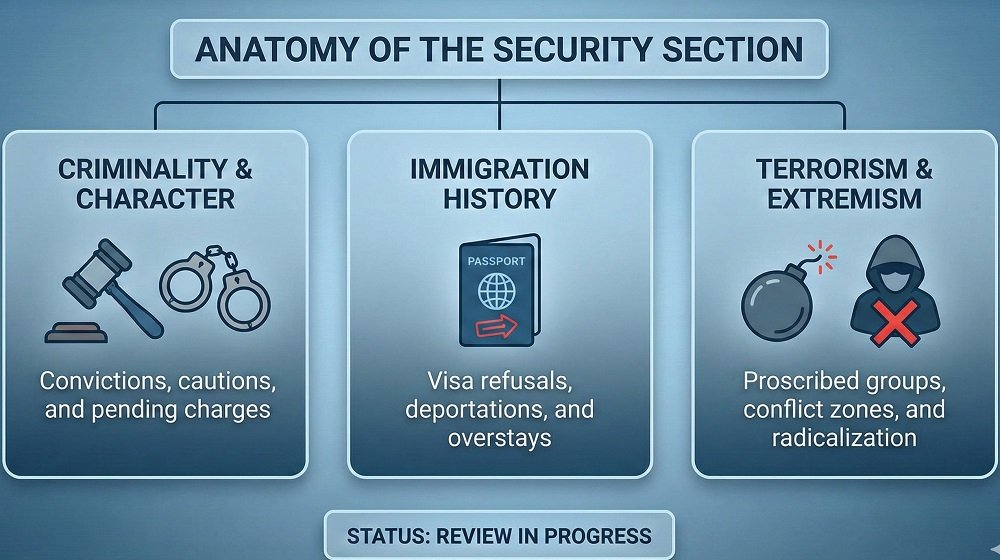
The questions generally cover three main pillars:
- Criminal History: Have you ever been convicted of a criminal offense in the UK or any other country?
- Immigration History: Have you ever been refused a visa, deported, or denied entry to any country (including the UK)?
- National Security: Have you ever been involved in terrorism, war crimes, or extremist organizations?
1. Criminal History & Convictions
The form asks about criminal convictions both in the UK and overseas. This includes:
- Custodial Sentences: Time spent in prison.
- Non-Custodial Sentences: Fines issued by a court, community service, or suspended sentences.
- Pending Prosecutions: If you are currently awaiting trial, you must declare it.
2. Immigration History (Visa Refusals)
This is where many applicants stumble. The system asks if you have ever been refused a visa for the UK or any other country.
If your US tourist visa was rejected five years ago, you must declare it. UKVI shares data with international partners. If they find a refusal you didn’t mention, your ETA will be denied for “false representation.”
Do I Need to Declare Speeding Tickets? (Common GCC Concerns)
For travelers from the UAE, Saudi Arabia, and Qatar, the line between a “traffic fine” and a “criminal offense” can be blurry.
Generally, you do not need to declare minor traffic offenses.
However, there is a crucial difference between a fixed penalty and a court judgment.
Traffic Fines vs. Court Convictions
| Scenario | Do You Declare It? | Reason |
| Speeding Camera Fine | No | This is usually a civil penalty (Fixed Penalty Notice) settled without court. |
| Parking Ticket | No | Civil matter, not criminal. |
| Drunk Driving (DUI) | Yes | This is a criminal offense involving a court appearance. |
| Unpaid Loans (Bounced Checks) | Maybe | If it resulted in a criminal court judgment or police case, Yes. If settled civilly, No. |
Rule of Thumb: If you went to court and a judge issued the penalty, declare it. If you just paid a fine online or at a kiosk, you typically do not need to list it.
Understanding “Spent Convictions” and The 12-Month Rule
“My conviction was 10 years ago. Is it cleared?”
The UK recognizes the concept of “spent” convictions (where a crime is removed from your record after a set time). However, the ETA application asks for global disclosure. You should declare the conviction and let the UKVI decide if it is relevant.
The 12-Month Threshold
The UK has strict rules for automatic refusal based on prison sentences:
- Sentence of 12 months or more: Your ETA will likely be refused. You should apply for a Standard Visitor Visa instead.
- Sentence of less than 12 months: You may still be approved if enough time has passed since your conviction.
If you fall into the second category, do not guess. etauk.ae can help review your specific situation before you submit, ensuring you explain the context clearly.
The Consequences of a Mistake: “Deception” vs. “Error”
The UK Home Office differentiates between an honest mistake and deception, but the line is thin.
If you fail to declare a past visa refusal, the caseworker doesn’t know you “forgot.” They assume you are hiding it. This is classified as Deception.
The penalties are severe:
- Immediate refusal of your UK ETA.
- Cancellation of your ETA at the UK border (meaning you are sent home on the next flight).
- A potential 10-year ban from entering the UK.
If you are unsure about an answer, it is always safer to disclose it with an explanation than to hide it.
How etauk.ae Helps You Avoid Security Rejection
You don’t have to navigate these legal definitions alone. At etauk.ae, we do more than just type your data into a form. We act as your safety net.
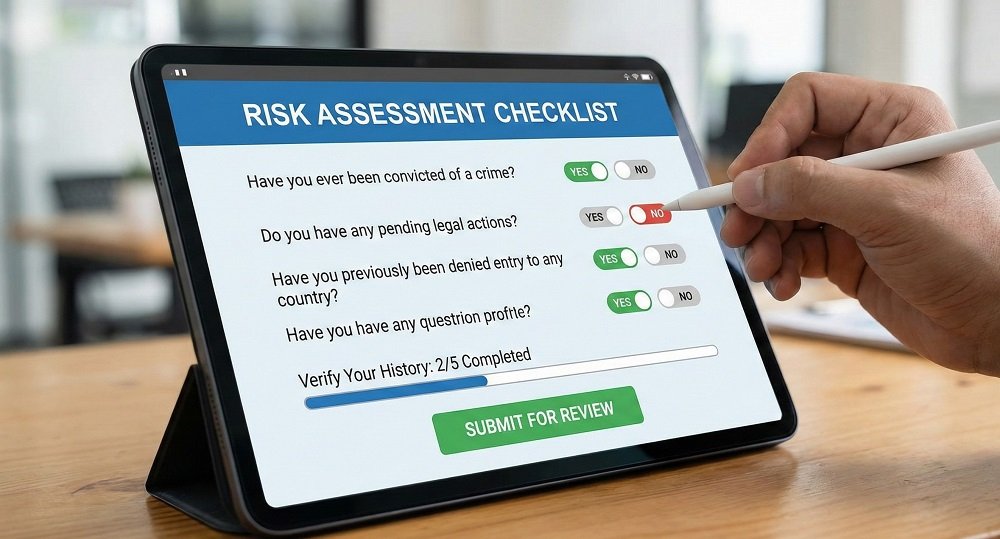
When you apply through our platform, our team conducts a manual review of your application before it reaches the UK Home Office.
We look for:
- Logical Inconsistencies: Does your travel history match your security answers?
- Disclosure Gaps: We flag areas where you might need to provide more detail (like a vague explanation for a past refusal).
- Photo Compliance: Ensuring your ID documents meet the strict biometric standards.
Don’t guess with your travel freedom. Apply for your UK ETA with etauk.ae and travel with peace of mind.
Frequently Asked Questions (FAQs)
What are the security questions on the UK ETA application?
They cover criminal history, immigration history, and national security.
Specifically, you must answer questions regarding past criminal convictions (domestic and international), previous visa refusals or deportations, and any involvement in terrorism or war crimes.
Do I have to declare speeding tickets on my UK ETA?
No, usually not for minor fixed penalties.
Simple speeding tickets or parking fines do not need to be declared. However, if the incident resulted in a court appearance, a criminal conviction, or a suspension of your license, you must declare it.
What happens if I make a mistake on the UK ETA security questions?
You risk refusal or a 10-year travel ban.
UKVI may view incorrect answers as “deception.” If you accidentally omit information, your ETA could be denied. Using a review service like etauk.ae significantly reduces this risk.
Can I get a UK ETA if I have a criminal record?
Yes, but it depends on the sentence length.
A criminal record does not essentially mean automatic rejection. However, if you received a prison sentence of 12 months or more, your application will likely be refused. You must disclose all details regardless of when they occurred.
Does the UK ETA check your background?
Yes, your data is checked against international security databases.
When you apply, your details are run through UK and global watchlists (including Interpol). This verifies your identity and flags any undisclosed criminal or immigration issues before approval is granted.