
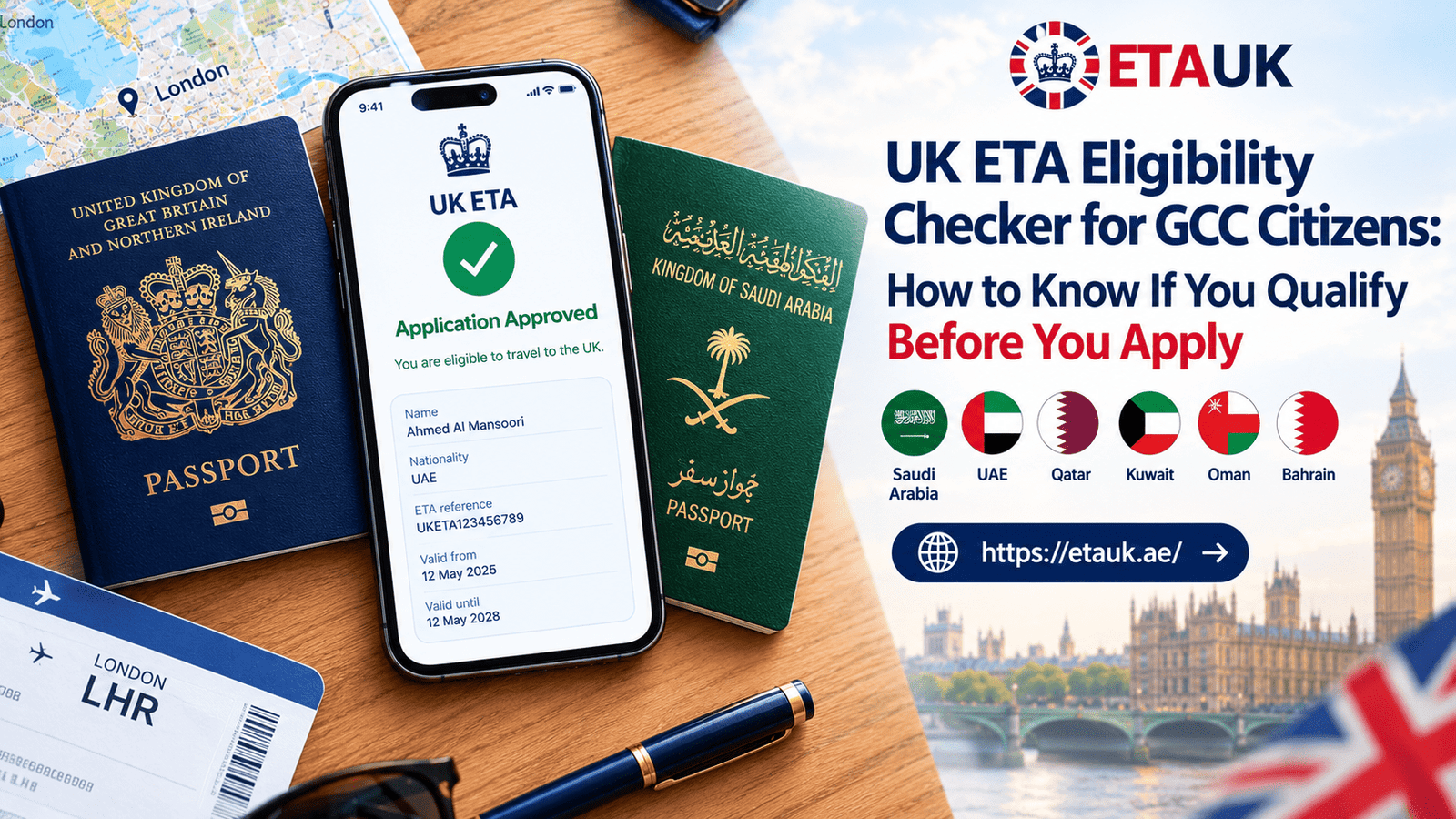
If you’re a citizen of Saudi Arabia, the UAE, Qatar, Kuwait, Bahrain, or Oman and you’re planning a trip to the UK, you’ve probably run into the term “UK ETA” somewhere in your research. Maybe a friend mentioned it, maybe your travel agent brought it up, or maybe you saw it while booking flights. Either way, you’re here because you want a straight answer to one question: do I actually qualify for a UK ETA, and how do I check before I waste time or money on the wrong application?
This guide walks you through exactly that. No fluff, no recycled definitions you’ve already read five times. Just what GCC citizens need to know to check their eligibility correctly, avoid the mistakes that trip people up, and get their ETA sorted without drama.
Official Portal: https://application.etauk.ae/
What the UK ETA Actually Is (In Plain Terms)
The UK Electronic Travel Authorisation is a digital entry permission the UK government introduced for travelers who don’t need a full visa to visit the UK but previously could just show up with their passport. Think of it as a middle step between “no visa needed at all” and “full visa application.” It’s linked to your passport electronically, and border officials check it before you even board your flight.
For GCC nationals specifically, this changed things. Citizens of Gulf Cooperation Council countries used to be able to travel to the UK without pre-clearing anything. Now, the ETA is mandatory before travel. Skip it, and you won’t be allowed to board your flight, let alone enter the country.
Who Counts as Eligible: The Real Checklist
Eligibility isn’t just about your nationality. It comes down to a combination of factors, and missing even one can get your application rejected or flagged for extra scrutiny. Here’s what actually matters.
Passport nationality. You need to hold a passport from an eligible country. All six GCC nations (Saudi Arabia, UAE, Qatar, Kuwait, Bahrain, Oman) are on the eligible list. This is the baseline requirement, and it’s non-negotiable. A GCC residency permit or ID card doesn’t count if your actual passport is from a different, non-eligible country.
Purpose of travel. The ETA covers short visits: tourism, visiting family or friends, business trips, and short-term study (up to six months, generally). If you’re planning to work in the UK, study for a longer program, or settle there, you need a different visa entirely, not an ETA. People sometimes assume the ETA is a catch-all travel document. It isn’t. It’s specifically for short, temporary visits.
Length of stay. Your ETA typically allows stays of up to six months per visit. If your trip is longer than that for any reason (an extended business assignment, a longer course, a family situation), the ETA alone won’t cover you.
No disqualifying immigration or criminal history. This is where people get caught off guard. If you have a prior UK visa refusal, a deportation order, an overstay on a previous visit, or certain criminal convictions, your ETA application can be denied. The system runs background checks, and inconsistencies between your application and your actual travel history are a common rejection trigger.
A valid, unexpired passport. Sounds obvious, but plenty of applications get delayed because someone’s passport has under six months of validity left. Check your expiry date before you even start the application.
Common Mistakes GCC Applicants Make
After watching how these ETA rollouts tend to play out, a few patterns show up again and again.
Applying too late. The ETA usually processes within a few days, but that’s not guaranteed. Applying the night before a flight is a gamble. Give yourself at least a week of buffer, especially during peak travel seasons like summer or around major holidays when processing queues get longer.
Entering passport details incorrectly. A single digit off on your passport number, or a name that doesn’t exactly match what’s printed on your passport (including middle names or how they’re ordered), can cause a rejection or a mismatch at the border. Triple-check every field against your actual passport before submitting.
Assuming a GCC residency = GCC nationality. This trips up a lot of expats living in the Gulf. If you’re a resident of the UAE or Saudi Arabia but hold a passport from a different country, your eligibility depends on your passport’s nationality, not where you live. Always check the rules for your actual passport-issuing country.
Not accounting for connecting flights. Some travelers think the ETA only matters if the UK is their final destination. If you’re transiting through the UK, even briefly, check whether your specific itinerary requires an ETA. The rules around transit can differ from a standard entry, so it’s worth confirming rather than assuming.
Ignoring past visa refusals. If you were denied a UK visa in the past, don’t leave that off your application hoping it won’t come up. The system cross-references this information, and an inconsistency looks far worse than an honest disclosure.
How to Actually Check Your Eligibility Before Applying
Here’s a practical sequence that saves time and avoids surprises:
First, confirm your passport nationality is on the eligible list. All GCC countries qualify, but if you’re applying on behalf of a family member or employee, don’t assume; verify their passport nationality directly.
Second, match your trip purpose to what the ETA covers. Tourism, visiting people, business meetings, or short courses are fine. Anything involving long-term work, settlement, or study beyond six months needs a proper visa application instead.
Third, check your passport’s expiry date. You’ll want at least six months of validity remaining from your planned entry date, though it’s smart to have more buffer if you travel frequently.
Fourth, be honest about your immigration history. If you’ve had a visa refusal, overstay, or any UK-related immigration issue before, factor that into your expectations and be transparent in your application rather than hoping it goes unnoticed.
Fifth, apply with enough lead time. A few days before your flight is the minimum. A week or more gives you room to fix any issues if something comes back flagged.
What Happens If You’re Not Eligible for an ETA
If your situation doesn’t fit the ETA criteria, that doesn’t mean you can’t travel to the UK. It means you need a different route. Longer stays, work purposes, settlement, or a history that disqualifies you from the ETA typically point toward a standard UK visa application instead, which involves more documentation and a longer processing timeline. It’s worth figuring this out early rather than discovering it days before a planned trip.
A Quick Real-World Example
Say you’re a Saudi national planning a two-week trip to London to visit your sister and do some sightseeing. You hold a valid Saudi passport with eight months of validity left, you’ve never had any UK immigration issues, and your trip is well within the six-month limit. That’s a straightforward ETA case. You’d apply online, provide your passport details and travel information, pay the fee, and typically receive your authorization within a few days.
Now compare that to someone from Kuwait who was previously refused a UK visitor visa two years ago and wants to attend a six-week business training program. That person’s case is more complicated. The prior refusal could affect the ETA outcome, and depending on the exact nature of the training program, a different visa category might actually be the more appropriate (and safer) path.
The point is that eligibility isn’t just a yes or no based on your passport. It’s a combination of who you are, why you’re traveling, and what your history looks like.
Final Thought
Checking your UK ETA eligibility as a GCC citizen really comes down to three things: confirming your passport nationality qualifies, making sure your trip purpose and length fit within what the ETA covers, and being upfront about any past immigration issues. Get those three right, apply with reasonable lead time, and double-check your details before submitting. That’s genuinely most of the battle.
If anything about your situation feels like it doesn’t fit neatly into the standard case, it’s worth getting it reviewed before you apply rather than after a rejection. A rejected application can complicate future travel plans more than a short delay to get it right the first time.
Related reading on etauk.ae: explore the tourist visa, business visa, and visit family & friends sections for details specific to your travel purpose, and check the latest visa news section for updates that could affect GCC applicants.